Read the testimonial from Fabienne Ménard, CFO of Manutan
Far from being limited to a control role, finance departments are becoming a genuine strategic partner in the service of growth, innovation and corporate responsibility.
Against this backdrop, Fabienne Ménard, CFO of Manutan, shares in this interview her vision of a proactive, business-oriented finance department that relies on data, cross-functionality and expanded skills to effectively drive performance, without waiting for heavy IT investments. From cash-flow management to ESG data management, not forgetting the fine-tuning of margins and investments, his account provides a concrete illustration of the transformation levers available to small and medium-sized businesses.
How does Manutan put data, ESG and operational efficiency at the service of sustainable performance? A question at the heart of Manutan's strategy, and one to which this interview provides some very concrete answers.
His testimony is part ofa series of interviews with finance players conducted for an exclusive study carried out in collaboration with Ifop "IA, métiers, réglementations : les priorités des fonctions finance 2025-2026" for the white paper La Finance à l'horizon 2030 : pilotage et transformation technologique.
"Our aim is to provide analyses and KPIs that improve the company's profitability and decision-making, taking a proactive stance rather than limiting ourselves to noting budget variances."
With a presence in 17 countries, the Manutan Group is one of Europe's leading BtoB e-commerce companies.
Its finance department is closely involved in the company's growth, whether it's managing acquisitions or optimizing operational performance. Fabienne Ménard, CFO and member of the Executive Committee, shares with us her missions and convictions, particularly with regard to the development of employee skills to improve day-to-day efficiency, without being dependent on IT investment in tools.
How can a finance department help executives make the right decisions?
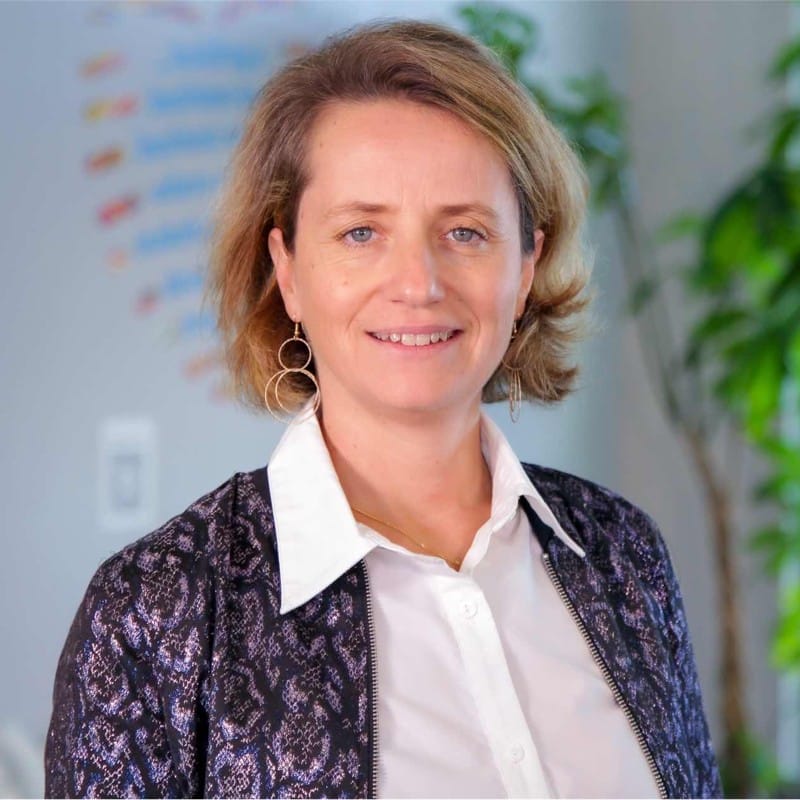
Today's managers need to form a real partnership with their CFO. The strength of a finance department lies in its cross-functional approach.
The finance department plays a key role in assisting management decision-making, thanks to two major assets: its cross-functional nature and its neutrality. That's why executives need to work closely with their CFO. The CFO understands the challenges faced by the various functions, and analyzes financial and non-financial data in order toanticipate the consequences of strategic decisions, as well as to guide them.
Manutan is a medium-sized company, so collaboration is easy. We've also opted for this collaborative approach to M&A, forming a close-knit team involving general management, legal, corporate and finance departments.
Furthermore, in order to support our development, I am committed to promoting a culture of rigorous cash-flow management within the company, notably through the optimization of inventories and processes, and by optimizing collection times. Indeed, it is imperative to maintain a robust cash flow to finance our future growth, whether through acquisitions, expansion of our logistics network, marketing investments or to support the development of our technology platform.
Can you give us some examples of how the finance department contributes to improving the company's overall performance?
We had noticed that the way margins were understood was incomplete and could lead to poor operational decisions. We therefore worked with the supply and purchasing department to provide them with a more comprehensive view of margins, enabling them tooptimize their product sourcing and referencing strategy.
In concrete terms, new performance indicators and a simple, operational calculation method have been introduced. Our aim is to provide analyses and KPIs that help to make informed decisions and improve the company's profitability, by adopting a proactive stance rather than simply observing budget variances.
Is Manutan's finance department responsible for implementing ESG reporting?
We collaborate actively on these issues with the CSR Director. The latter provides a vision of CSR issues in relation to the company's practices and objectives, while the finance department ensures the reliability of the indicators, by challenging and securing them.
For example, we co-pilot the CSRD project, working together to define strategic recommendations and choices. The finance department contributes its expertise in understanding indicators, clarifying them, making them traceable, reliable and auditable. Data collection will also fall largely within our remit.
At the same time, one of the major challenges of the CSRD is the diversity of information sources, which are sometimes poorly structured. Above all, it is a cross-functional project that involves all departments, not just the finance and CSR departments. That's why we encourage collaboration between financial and operational profiles to bring this project to fruition.
Finally, we have also decided to place the circular economy at the heart of our business model by developing a professional furniture take-back and reuse activity, via the opening of a dedicated Hub. The aim is to help companies and local authorities anticipate future regulations (AGEC law, right-to-repair...) while contributing to achieving "net zero" by 2050. Here again, the finance department plays an essential role in orchestrating this success, notably by prioritizing investments.
The complexity of CSRD lies in the need to bring together data from different company systems, some of which are not necessarily structured.
Are you taking advantage of regulatory constraints to reorient your company's approach to management?
We don't run the company to the rhythm of regulatory constraints, but we do strive to respect them and, above all, make the most of them.
For example, we have chosen to aim for ECOVADIS certification to assess our CSR approach. In the interests of alignment and efficiency, we first mapped the Ecovadis criteria against those linked to CSRD, RGPD and the Sapin 2 Law, in order to establish the points of adherence.
On this basis, we sequence the deployment of Ecovadis objectives while respecting the regulatory constraints of the various fields, and we also avoid multiplying internal procedures. We also use the Ecovadis criteria to manage our CSRD indicators.
Our aim is to decompartmentalize our approach, identify the relevant information and define the priorities that will serve the CSR strategy across the board. My team has been actively working on these issues for over a year.
In fact, are you planning to invest in technology to help your finance department evolve?
My priority in this area is the changeover of our ERP. We are facing major harmonization challenges between our various subsidiaries, spread across seventeen countries: with our entrepreneurial culture and growth supported by acquisitions, we need to reconcile local autonomy with the challenges of pooling and aligning at Group level. With this in mind, we are consideringopting for Cloud solutions, which will facilitate integration and enable us to benefit from continuous innovation.
I'd also like us to invest in an EPM to centralize information and carry out analyses in a standardized, methodical way. At present, we use Excel or BI solutions, but this approach is proving unsatisfactory, not least because of a lack of homogeneity that impacts our efficiency.
How easy is it for finance departments to obtain budgets to upgrade their technologies?
All our businesses are undergoing rapid change, and allocating budgets to new technologies requires rigorous prioritization.
The IT roadmap is arbitrated at Management Committee level, on the basis of objective criteria. Sequencing projects is essential, especially as IT departments may not be able to make the most of too many projects and budgets in too short a time.
In order to assert its needs, the finance department must clearly define its ambitions and draw up precise specifications. One of the key complementary factors in this respect is the ability of teams to innovate autonomously, in order to reduce dependence on heavy investment. This is why our next recruitments will not be limited to purely financial profiles. We're looking for people who also understand information systems and the challenges of data management.
These profiles will be able to challenge IT and/or enable us to automate our processes. Finance departments are currently under-equipped in this area, and I see this as a strategic priority. The recruitment of a data profile within credit control has already enabled us to achieve significant optimizations.
Has the digital transformation of finance made offshoring unnecessary?
Manutan is an ETI, which limits the potential leverage effects of offshoring. The creation of shared service centers in low-cost countries, with the sole aim of saving a few FTEs, is not in line with our strategy. We prefer an approach focused on improving data quality, implementing high-performance analysis tools and harmonizing processes, while keeping a close eye on the resources allocated.
This means freeing up staff time for higher value-added tasks. We are convinced that this method, combined with shared expertise, is more effective than low-cost outsourcing.
Artificial intelligence (AI) is also a valuable operational asset. We are currently using it for debt collection and for highly targeted processes.
Would you like to discover new testimonials? Find out about the other exclusive interviews conducted as part of the study "AI, businesses, regulations: priorities for finance functions 2025-2026".