Publish
Share
Send

CES 2025 feedback

As I do every year, here's a report on my visit to the CES show for :

  • Presenting the major trends
  • Share with you my favorites, interesting innovations or those I consider less relevant.
  • This post will give you the best possible idea of what CES 2025 was like.

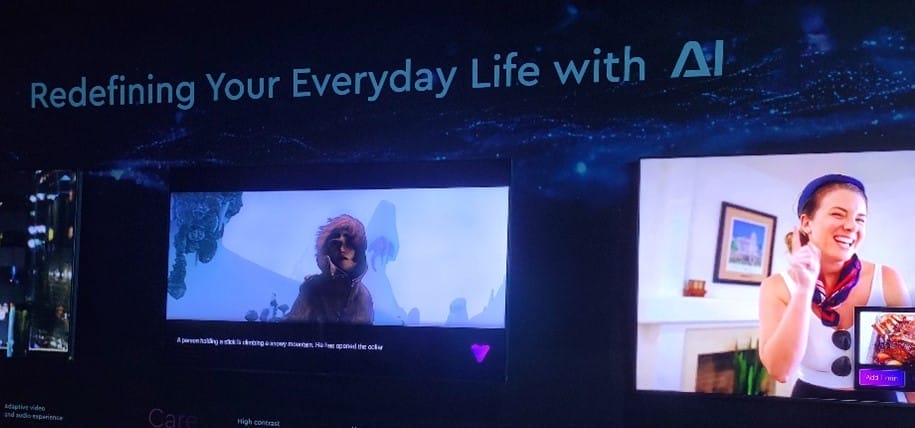
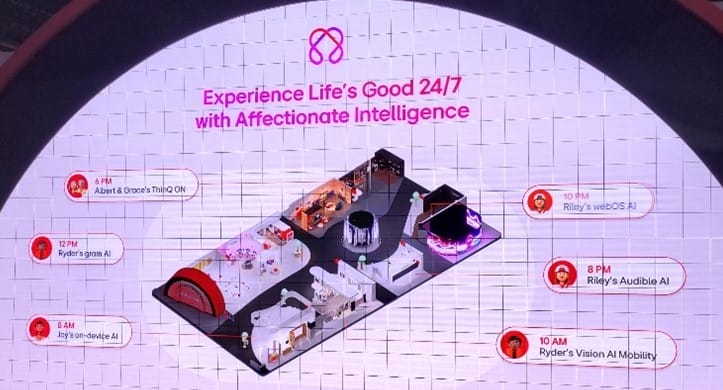
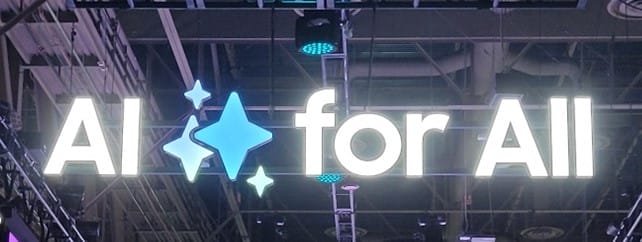
This year, I could sum up CES with just these 3 photos:

Because yes, AI was everywhere this year! Be it :

  • "affectionate" like LG,
  • "for all" as with Samsung
  • "every day of our lives" as with Hisense,

Whatever the theme: healthcare, robotics, TV, the environment, etc., almost all the innovations on show at CES involved artificial intelligence in one way or another.

Sometimes to excess... using AI in all sorts of ways, sometimes to good effect, but sometimes just for the sake of communication...

In short, let's dive into the deep end and try to share with you all the themes, solutions and trends I observed at this 58th edition of CES.

A few figures to get you started

A few numbers to start with, CES numbers are always impressive, and they're up this year:

  • More than 232,000 m² of exhibition space,
  • Over 4,500 exhibitors, including 1,400 startups in Eureka Park, including 150 French startups (110 via Business France + 40 via Auvergne-Rhône-Alpes),
  • More than 141,000 attendees, with over 40% from outside the U.S. (over 150 countries represented),
  • More than 6,000 journalists, content creators and analysts,
  • 60% of Fortune 500 companies represented,
  • The show generated over 27,000 news articles and content.

When it comes to start-ups, South Korea is well ahead, with France in second place. This year, there were fewer of us than in previous years... and so much the better!

I found this year's French Tech to be very qualitative: fewer "flashy" solutions, and more real innovations.

Automobiles at CES 2025

I find that after the peak in 2018 and 2019, the automotive part of CES is shrinking year by year and fewer and fewer automakers are present.

Nevertheless, this part of CES dedicated to mobility is always interesting, if only to sense trends through the various equipment manufacturers, who are increasingly present.

And once again this year, as we stroll the aisles of this part of the show, there's no doubt about the future:

  • Electrification
  • Alternative mobility
  • Autonomous driving

The spotlight is on suppliers of electric recharging solutions, with everything from mobile units that come to you with certain portable or stand-alone solutions, to more conventional solutions in the form of multiple or large-capacity charging stations.

What also stood out for me this year was the number of exhibitors of alternative mobility products such as scooters and electric bikes, which were not necessarily so numerous in previous years.

Another alternative if you want to stand out even more: the 4×4 that carries your e-vtol in the trunk! You drive to the take-off site, and then the drone takes over until you reach your final destination.

The 2 machines have already been tested and validated. Obviously, with last summer's episode in France and the ban on cab drones for the Olympic Games, it's more likely that they'll be used in China. Another step backwards for Europe in terms of innovation ....

Lots of drones on display at CES this year:

  • Delivery drones,
  • Mapping drones
  • Transport drones (even if they are struggling to establish themselves everywhere, they are becoming a reality in certain countries and regions).

To come back to more concrete mobility, during the 3 previous years' presentations I mentioned Sony's car in collaboration with Honda, and well... it's still here... 4 years after its first appearance!

This big PS5 on wheels, with screens everywhere, has never been so close to commercialization, with pre-orders now open for delivery this year in the U.S. and autumn 2026 in Europe. On the other hand, the entry ticket (over $90,000) still seems very high for a maximum range of 650 km. This seems to me to be well above the level of other manufacturers, so we'll have to wait and see if it's competitive.

Honda, independently, also presented the evolution of its prototype already presented last year, the Honda 0 saloon, a computer on wheels.

A new operating system will be embedded in the car. It is derived from the Asimo operating system (the Honda robot presented a few years ago).

With a processor that deploys 2000 terabytes in the service of autonomy, level 3 (identical to Tesla) autonomous driving is achieved without difficulty.

But the real trend to emerge from the mobility section of the show remains autonomous driving.

On the one hand, because the number of manufacturers of camera or lidar devices is constantly increasing, and because these devices are becoming less and less detectable, as seen here :

And secondly, because it's becoming a reality here in the US.

In addition to the new Waymo products on display on the stands :

  • Diversifying away from dependence on Jaguar I-pace by launching the Zeker RT, an autonomous minivan, and the Hyundai Ioniq 5 ,
  • Major technological simplifications, from 30 cameras on the current system to 16 in the next version + 5 lidar and 6 radars,

They're everywhere in San Francisco, Phenix and Austin. Here, autonomous driving is a reality.

It was even possible to come across Zoox, Waymo's very likely future competitor, in Las Vegas. Zoox has created a vehicle entirely dedicated to autonomous driving, with no steering wheel and passenger seats facing each other (unlike Waymo's classic car retrofits). And it's all made possible by the GAFAMs: Google (Waymo) and Amazon (Zoox), who are behind the autonomous driving innovations.

To conclude this section, BMW has come up with a very concrete innovation, as it will be available in its future Neue Klasse range scheduled for this year.

This is BMW Panoramic Vision: a head-up display technology that extends across the entire width of the windscreen, between the two pillars. Unlike conventional solutions, this system projects information onto a dedicated black surface, making it visible to all occupants. Essential data, such as speed or navigation, are displayed in the driver's field of vision.

As an option, BMW offers a 3D head-up display, which adds an extra layer of information and interactivity. It displays data related to automated driving and navigation alerts.

VR / XR at CES 2025

Few VR headsets apart from 2 or 3 Apple Vision Pro or Meta Quest3 to illustrate application demos, with no announcements of innovations in virtual reality.

The only new product is Sony's "XYN" mixed reality headset, which is presented as a tool for creating spatialized content, a sort of integrated solution combining hardware and software to capture images in real life and then combine them to transform them into virtual images. It's hard to believe in the success of a headset that seems more dedicated to professionals, with a price tag approaching $4,000 compared to Meta and even Apple Vision.

On the other hand, I was struck by the number of "connected" glasses in general, whether augmented reality, mixed reality or simpler glasses with only audio and video recording included, there was something for everyone.

Part of this proliferation of connected eyewear is due to the success of the Meta Rayban, which has been widely copied. Other glasses are in line with what we imagine tomorrow, notably with augmented reality, which this year surpassed VR and mixed reality.

Many manufacturers continue to work on smartglasses, connected glasses with only a screen projection inside, which in fact allows a contextual display to be placed in the viewing angle.

So this year, there were plenty of brands trying to get a foothold in this market, and there's no doubt that this trend will continue in the months and years to come.

Essilor Luxottica's "Nuance Audio" range also featured simpler glasses that served as hearing aids to avoid other, less discreet devices.

But the scopes that stood out for me the most were the Ultralite Pro from Vuzix.

Xreal and Vuzix are well-known suppliers of connected glasses, having been present at CES for several years. But the Ultralite Pro stands out for its integration of color LCoS projectors, a real improvement on previous green monochrome displays. The field of view is also enlarged, and the 3D display effects bring a depth of field and an experience quite unlike any other glasses I've tried.

So, obviously, they're still a little too big and heavy for all-day use, but the evolutions proposed by the various manufacturers over the past year reflect the industry's efforts to combine functionality and everyday portability.

I also tested real-time translator glasses, equipped with a microphone, which displayed the translation of the conversation on the fly, and even though I don't understand any Korean, the English translation seemed coherent.

In any case, I feel that the advances presented at CES 2025 on eyewear in general sketch out a future where augmented reality could be seamlessly integrated into our daily lives. As someone who has trouble remembering faces and names, I dream of glasses that will tell me in real time who I'm talking to.... 

Healthcare at CES 2025

It is perhaps in this section that I have found the most relevant application of AI, or at least the most usable here and now.

Among the real innovations in the service of health were these various solutions for visually impaired users.

Starting with WeWalk's smart cane 2, which is an evolution of the folding cane we saw last year, but with some interesting changes.

Equipped with AI, the cane detects obstacles and interacts by voice. No more need for a smartphone in hand to see the environment, as is the case with certain innovations for this type of need.

There were other devices to help the visually impaired, such as "KapX", an ultra-lightweight headset from KapSys, equipped with AI and a speaker to guide and help its users detect obstacles, identify ground types and navigate safely.

Or this innovation from Artha that I really liked, which uses the concept of "sensory substitution".

It's a haptic lumbar belt that uses mechanical impulses to draw on the back the 3d image captured by the camera.

In fact, the brain generally has sufficient plasticity to perceive haptic messages (messages of touch) in the same way as the cortex decodes a visual message. The belt actually transforms the pixels of the image into a haptic massage that imprints the image on the back, enabling the wearer to understand his or her environment. Here's an example of the kind of useful innovations we're happy to see at CES.

Another health innovation that could well become a genuine technological and medical revolution is Hope, the bra designed by DFT Médical that, by analyzing a certain amount of information (blood flow, fever, etc.), is capable of detecting breast cancer after 15 minutes' wear.

The aim is to detect suspicions as early as possible, so as to initiate more in-depth medical analyses and thus reduce treatment times and increase the chances of a cure.

To conclude with some interesting innovations (and I'm not saying this because of my age), Laclarée has invented eyewear capable of aiding the eyes' natural autofocus. These adaptive glasses are designed to help presbyopes regain visual comfort. Autofocus technology, integrated into the frame, is quite impressive! Although I haven't tried it out, of course, as I don't need it yet.

And then among the usual health devices - Withings again presented a prototype of a connected mirror - there was one that impressed me by the number of exhibitors: connected rings. They were everywhere!

It's hard to understand the differences between each of them, but if I had to pick just one, I'd say the Velia connected ring from our Swiss friends.

Ultra-thin compared to its peers (Velia is on the left in the photo vs. the size of another ring on the right), it is capable of tracking the usual indicators (heart rate, sleep, stress) but the 2nd little difference is that it also measures blood pressure and heart rate thanks to a ppg technology different from other rings.

And to round off this roundup of health innovations, I present the electric spoon that imitates the taste of salt...

Enjoying a meal without salt, as if it were seasoned, is the promise made by Kirin with its "Electric Salt Spoon" which, when it comes into contact with the mouth, sends an electric current onto the tongue that enhances the taste of food. An interesting product for a diet lower in sodium which, as we know, is responsible for sometimes serious blood pressure problems. I wasn't able to test it, but it looked promising.

Displays at CES 2025

So what's new with all the displays in 2025?

Well, from my point of view, it's an edition without any huge surprises on that front. There are of course improvements and new features, but most of the innovations presented on the screen and TV side were already more or less known or seen in previous years.

One thing to keep in mind, however, is Lenovo's stretchable screen, which enables the user to go from a 14" to a 16.7" display surface, a gain of around 50% - and all for just 1.7 kg! Attractive on paper, it remains to be seen whether the screen holds up under real-life conditions.

Samsung's screens are more or less "dazzling" in the sense of brightness, with very bright Oled QDs at 165 Hz and sizes up to 115 inches.

Samsung is also putting a lot of emphasis this year on anti-reflective screen treatments.

And, of course, lots of AI - I'll come back to that later.

TCL's latest display technology continues to grow in size, with this 115-inch QD-Mini Led! Quite simply the largest diagonal on the market in this technology.

And at LG, screens are getting brighter all the time. This year, they demonstrated how their transparent screens, already visible last year, were integrated with even larger diagonals and entirely in Wireless.

They showcased their LG multi-door refrigerator, which incorporates one of these transparent Oled screens. The LG Signature Oled, as it's called, is a prototype that we may soon be seeing in our kitchens.

Other AI-related innovations were also presented at LG, to which I'll return later.

Robotics at CES 2025

There's a lot to be said for robotics again this year.

Firstly, it's becoming increasingly personal thanks to artificial intelligence, which creates and personalizes more sophisticated interactions than ever before.

It's also worth noting that the robotics ecosystem is increasingly connected to the home automation environment. Robotics and smart home increasingly overlap and interface.

This can be seen on the Samsung stand, where the promise is a fully interconnected ecosystem through SmartThings and AI :

And this is just the beginning: it's not hard to imagine that every year, incrementally, we'll see the emergence of robotics for the home, fully integrated with all existing devices. The TV that communicates with the fridge, preheats the oven and asks the robot vacuum cleaner to do the housework, or take out and hang the washing in the washing machine. (Well... I'm getting ahead of myself... but we're not that far off)

And to move towards this goal, we saw quite a few new products at CES this year:

Roborock detects stray items and collects them in a dedicated area

Ai Me from TCL which, like Ballie from Samsung last year, is designed to assist families or keep an eye on children. The robot is equipped with sensors and cameras that enable it to detect its environment, serve as a home surveillance camera, connect to other smart devices to control them, or take on an all-Minogean appearance with expressive digital eyes that reflect different emotions.

On a more serious note, this year we came across many humanoid robots, showing the progress made each year in this field. From :

Unitree G1 still remote-controlled

Pollen Robotics with their opensource robotics platform

The latest developments in Ameca, already known for 3 years

And even more exotic things like Mirumi, the robot that can replace children or animals (left) or MarsCat, the very first robot cat (right).

In this robotics section, I'd also like to add exoskeletons, which are quite numerous this year, whether to assist, lift heavy loads or help disabled people regain a certain degree of mobility.

I can't end this column without mentioning the Nvidia announcements concerning Cosmos, a platform designed to accelerate the development of physical AI, particularly for robots and autonomous vehicles. Cosmos is an open-source foundation model for robotics that, instead of having to program a robot, allows it to be shown what to do and reproduce, promising to accelerate robotic learning.

The environment and FoodTech at CES 2025

I found the Israeli start-up SolCold, which has invented a nanotechnological polymer coating. It uses sunlight to cool surfaces without consuming energy. It can be installed on the roofs of data centers or warehouses, for example, and will passively reduce the temperature in the building by 5°. The thermal performance brought to the building can represent a reduction in energy consumption and costs, for heating or cooling.

The Jackery company has launched a solar tile that looks like a real tile. Until now, it has been difficult to shape and form solar collectors into anything other than flat shapes. With their solution, it will now be possible to cover an entire roof and generate electricity over its entire surface, which is not usually the case with solar panels.

On the foodTech / Agritech side, I was able to find many more or less useful devices ranging from a connected oven that recognizes food and programs its cooking all by itself, to a WiFi-connected wood pellet barbecue that operates autonomously, to Plantaform, a Canadian company, which has designed an intelligent indoor garden using fogponics, a mist-based irrigation technology originally developed by NASA that promises between 30% and 50% less water for hydroponics.

I'll skip the autonomous connected tractors, which have already been visible and operational for several years.

AI at CES 2025

I've saved this section for last because, as explained in the introduction, the big trend at this 2025 edition of CES was AI!

It was everywhere, starting with Nvidia's most striking keynote this year.

To sum up, Nvidia consolidated its dominant position in the semiconductor and compute technology sector for AI with several landmark announcements:

  • Its new range of graphics cards based on Blackwell architecture, the GeForce RTX 50, offer unrivalled performance on this type of hardware.
  • A desktop data-center (well, I'm exaggerating a little...) but at least a supercomputer capable of running models with up to 200 billion parameters without recourse to a cloud infrastructure.
  • The advanced Cosmos artificial intelligence platform I mentioned earlier.

With these announcements, Nvidia significantly strengthens its leading position in artificial intelligence and graphics technologies.

But the AI announcements don't stop there, we can mention AI for image and sound, with LG's TV that adapts to ambient brightness and viewing conditions.

Or the AI vision embedded in Samsung TVs, capable of improving image quality, subtitling and automatic translation in real time.

Tomorrow, our TVs will be able to give us a description of the recipe in the program we're watching, the name of the actor, where the scene was shot, and so on.

The TV even becomes the hub of video surveillance (monitoring all videos or suspicious noises to send you an alert in the event of a problem).


In addition to the SVOD buttons, LG has already planned to add an AI Button to its future remote controls, to trigger all personalized interactions such as sound, colorimetry and even advertising tailored to the person watching the program!

In short, AI was everywhere at CES this year, and will undoubtedly be everywhere in our lives tomorrow, whether we like it or not. It will continue to dominate the technology scene, with a transition to "Agentic AI", artificial intelligence capable of anticipating user needs and providing proactive assistance.
Conclusion

The future described at CES suggests that everyday life will be increasingly controlled by intelligent systems, capable of analyzing our uses and adapting to them or anticipating them.

I also believe that AI is helping to narrow the gap between humans and robots.

We can clearly see a trajectory taking shape where AI and innovation will be human-centric. Innovation that is resolutely collaborative, ultra-connected and, above all, focused on AI to create new services in all fields.

In my opinion, AI must go beyond simple connectivity to bring greater comfort, safety and health to everyday life.

However, there was one subject that wasn't quite visible enough for my taste at the show: ethical and societal concerns. Indeed, they were less present this year at CES, relegating the subject of AI governance to 2nd place (I'm talking about governance, not regulation! ).


In any case, this year 2025 of CES will have been a little different from the last 2 years I've lived through.

Personally, I really enjoyed this year's event, which, although a little less inspirational, put the spotlight back on concrete innovation.

This year, I've seen products that work, that will come out in 2025, so we're really in the here and now!

Picture of Jérôme Malzac

Jérôme Malzac

Innovation Director

Related categories
Agentic AI: autonomy comes at a price

Agentic AI: autonomy comes at a price

AI no longer simply performs tasks. It decides, plans and coordinates....
Semarchy Customer Day 2025: Micropole present as sponsoring partner

Semarchy Customer Day 2025: Micropole present...

Semarchy Customer Day 2025 was held on Tuesday, October 14, 2025...
Why Luxury should invest in a GEO strategy: from visibility to algorithmic desirability

Why luxury brands need to invest in...

When artificial intelligence redefines desirability Luxury has always been a...
ACCELERATE WITH US
ARE YOU DATA FLUENT?

Contact us