Digital Product Passport: Structure your data, boost your impact

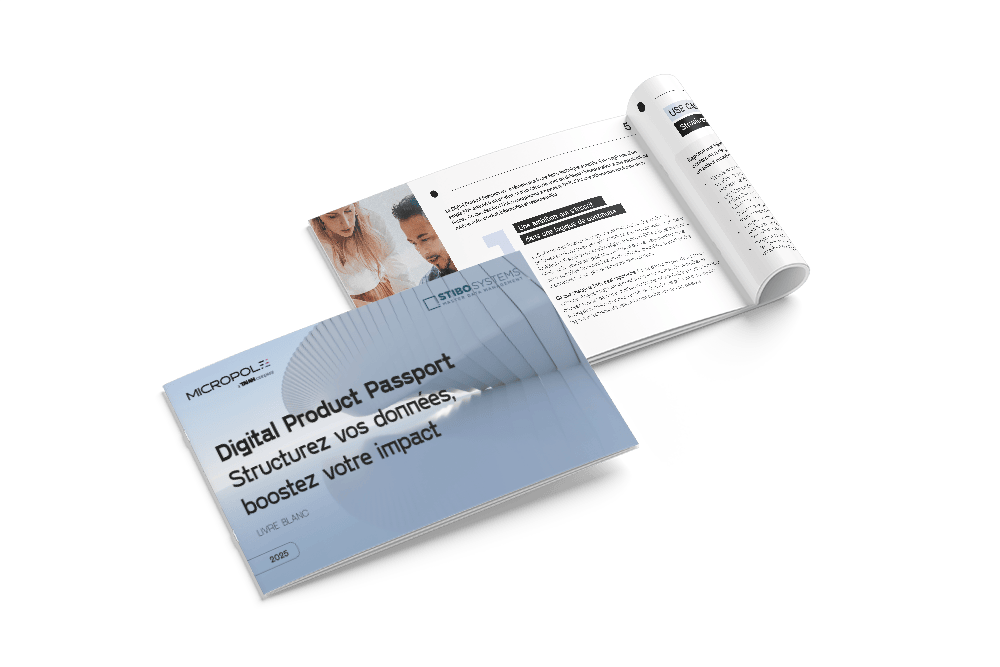
The Digital Product Passport is on its way. Are you ready for it?
Much more than a regulatory requirement, the Digital Product Passport (DPP) represents a strategic opportunity to transform your product data management.
Wondering how to make PLR a real driver of digital transformation for your organization? This white paper will guide you step by step. You'll discover how :
- Understand the real challenges of the Digital Product Passport, beyond mere compliance, and anticipate its impact.
- Identify the key data to be structured, collected and made reliable in order to build a relevant, traceable and usable PLR.
- Implement cross-functional governance of product data in line with regulatory requirements and market expectations
- Take advantage of solutions like Stibo Systems' Product MDM to manage your data over the long term
A clear, operational and immediately actionable guide to turning product data into a decisive advantage. 🚀
What is the Digital Product Passport?
The Digital Product Passport(DPP) is a strategic initiative of the European Union, designed to transform the way companies manage and share information about their products. This digital passport aims to make available reliable, verifiable and up-to-date data on every product: composition, origin, environmental impact, repairability, recyclability, certifications, and so on.
Its aim is clear: to enhance transparency and traceability at every stage of the product life cycle, encourage more sustainable practices, and give consumers, partners and regulators greater visibility over what they buy, use or recycle.
Progressively mandatory from 2026, the PLR will first be imposed in key sectors such as textiles, electronics, batteries and furniture, before being extended to other industries. It marks a major evolution in product data governance, which companies need to anticipate today.

"A well-framed Digital Product Passport becomes a lever to lend credibility to an environmental commitment, reinforce a value proposition, and build trust. A useful constraint, in short."
The product repository, the essential foundation of the PLR
Implementing a reliable and sustainable PLR depends on mastering product data, which in turn depends on implementing the right tool.
PIM (Product Information Management) is the essential foundation for structuring this data: it centralizes, models and distributes key attributes to internal systems and players in the value chain.
But faced with the growing complexity of regulatory requirements, CSR guidelines, and expected traceability, a PIM is no longer always enough. That's where Stibo Systems' Product Master Data Management (MDM) comes in.
Designed with sustainability in mind, Stibo Systems' STEP platform goes beyond PIM. It enables :
- Structuring product data sustainably with Sustainability Data Cards,
- Involve each business line in a unified and controlled governance system.
- Actively manage evaluation grids and standards, keeping pace with changing regulations.
- Disseminate regulatory data in line with local or sector-specific requirements.
- Manage compliance over the long term, as a strategic asset in the service of transparency and sustainable performance.
PIM is essential for getting started. But to scale up, adapt to change, and align all businesses on reliable product data, MDM becomes a decisive lever.
Ready to turn your product data into a strategic asset?
The Digital Product Passport marks a turning point. Beyond its regulatory dimension, it places product data at the heart of corporate strategy. Data Quality is no longer simply a technical or documentary issue, but a lever for overall performance, transparency and competitiveness.
The PLR is therefore not a constraint, but a real opportunity: to rethink the management of your product data, putting it at the service of your compliance, operational efficiency and, above all, customer confidence. In this guide, written in collaboration with our partner Stibo Systemsyou'll discover how :
- Anticipating future European obligations
- Going beyond compliance to create a real competitive advantage
- Structure sustainable, scalable and forward-looking product data governance
- Mobilize the right tools (PIM, MDM, Sustainability Data Cards) to make your information more reliable
Practical, structured and operational content - designed for decision-makers and field teams alike.
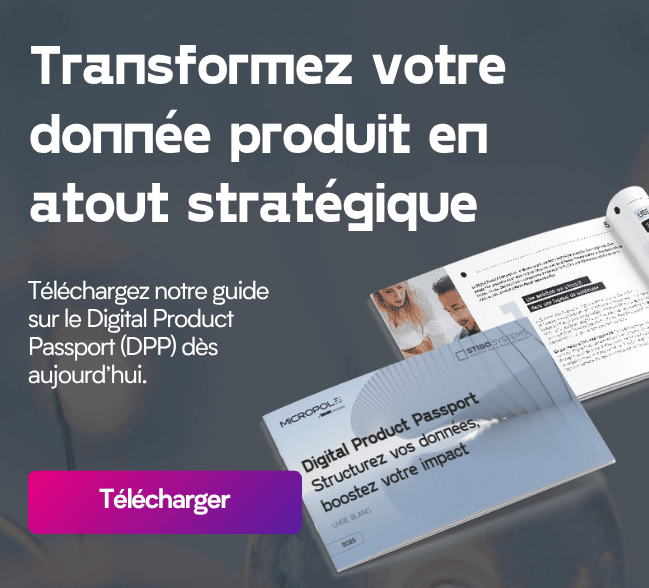
Why download this white paper?
The Digital Product Passport will profoundly transform product management in Europe. This guide is designed to help you steer the change, rather than undergo it. With expert advice, concrete use cases and a proven methodology, this guide gives you the means to act now.
🚀 Stay one step ahead of regulations that will transform your industry
🔍 Master your product data for greater compliance, credibility and performance
🛠️ Gain access to a practical method for structuring, enhancing the reliability and value of your strategic data.
PARTNERSHIP
Find out more about our partnership with Stibo Systems
Micropole and Stibo Systems combine their expertise to revolutionize product data management, offering integrated solutions that facilitate traceability, quality and compliance in a constantly evolving digital environment.
CONTACT
Get a head start
Our experts are at your disposal to guide and support you in implementing your data transformation project.
EXPERTISE
Consulting and integration in data management and governance
Control the quality of your data and turn it into a growth driver for your company: discover our Data Management & Data Governance services today.

Questions and answers about the Digital Product Passport
What is the Digital Product Passport (DPP)?
The PLR is a European Union initiative designed to centralize and make accessible key information on products: composition, origin, durability, reparability, certifications, and so on. It aims to enhance transparency and traceability throughout the product life cycle.
When will the Digital Product Passport become mandatory?
The obligation to introduce a digital product passport will begin gradually from 2026, with priority application in sectors such as textiles, electronics, batteries and furniture. Other sectors will follow.
Is my company covered by the Digital Product Passport?
If you manufacture, distribute or market physical products in the European Union, you will most likely be affected when it comes into force in 2026. The exact scope will depend on your sector, product type and role in the value chain.
Where to start preparing for the Digital Product Passport?
The first step is to identify the product data already available, assess its quality, and map any gaps. This white paper, written in collaboration with our partner Stibo Systems, offers you a clear method for structuring this process and laying the right foundations. Download it now.
What is MDM STEP from Stibo Systems?
STEP from Stibo Systems is a Master Data Management (MDM) solution for managing reference data and product information (PIM). STEP enables companies to centralize and enrich their data, ensure its quality and distribute it efficiently across their systems and channels.
How does STEP from Stibo Systems contribute to regulatory compliance?
By centralizing and structuring all the data required for compliance.
STEP enables you to model precisely the attributes required by regulations (composition, origin, certifications, recyclability...). This data is stored in a single, governed and traceable repository.
By integrating regulatory standards and requirements at the heart of the data model.
Sustainability Data Cards can be used to add evaluation grids aligned with standards such as the CSRD, the DPP directive, or the AGEC law. These assessments are dynamic and updated as standards evolve.
By enabling controlled, multi-actor governance.
Each business (CSR, quality, compliance, IT, etc.) can contribute to its own scope within a shared framework, with validation rules, approval workflows and a history of modifications.
By facilitating the distribution of data to the right channels.
STEP enables compliant data to be published via API, QR code or web services (DaaS), to feed a PLR, an external platform or a regulatory audit, in the right format, at the right time.
By adapting to the variability of regulations.
The platform is designed to be agile. It enables criteria, compliance models and assessments to be adjusted rapidly, without complex development, to keep pace with regulatory changes.